Caitlin Harvey
King Charles III’s coronation in 2023 brought hundreds of Indigenous leaders from the Commonwealth to Britain, showcasing some of the Crown’s oldest diplomatic ties outside of Europe. It wasn’t the first time that Indigenous peoples had represented their interests on British soil. In 1710, one Algonquian (Mahican) and three Haudenosaunee (Mohawk) diplomats famously travelled to London to request military aid from Queen Anne. Once in Britain, they were feted. Toured around in royal carriages and given gifts of silver communion plates, these men helped to establish a diplomatic relationship with the British Crown (separate from their dealings with settler governments) that remains in place today. For most Indigenous groups, such relationships endured long after British rule ended. Only eighteen months ago, eighty Māori tribes (iwi) sought the King’s support to protect their treaty rights against the New Zealand government, invoking those links to the Crown enshrined in the Treaty of Waitangi (1840).
Diplomacy is, of course, only one dimension of modern (and early modern) Britain’s connections to Indigenous peoples. Even “native travelers” to Britain were a diverse bunch, as Coll Thrush’s Indigenous London has shown. Indigenous performers, poets, captives, activists, artists, and others all came, shaping British culture through their participation in Wild West shows and contributing to Allied military victories by using Indigenous languages as ‘code’. For British students, these histories – of Indigenous peoples and their presence in Britain – are often new. Yet they urge students to reconsider events they thought only happened ‘out there’, in imperial spaces, seeing them also as ‘histories from here’, within Britain, too.
In considering how to teach and write ‘histories from here’ (or issues of method and historical positionality), Indigenous history seems particularly evocative. Links to place and land are vital to Indigenous life and cultures. Indigenous histories, as Susan Hill’s The Clay We Are Made Of reminds us, are fundamentally place-based, relying upon “stories of our land”. But it is also true that Indigenous peoples under British rule were more mobile than historians have recognised, and their influence might be fruitfully examined well beyond a local or regional scale. Examining Indigenous history from Britain (‘here’) thus poses a number of interesting, although not entirely unique, challenges. How, for instance, should one teach histories so rooted in place from afar? What does modern British history look like with Indigenous peoples as its central actors?
Such questions deserve more thorough consideration than this blog post can provide. But I began to think about them differently upon moving from North America to Britain. While I had researched and taught about particular Indigenous communities before, I found myself teaching much more Indigenous history in Britain than I had in North America to students with much less familiarity with the places, politics, and values of these many, diverse communities. In fact, I was often asking students to unlearn familiar historical and present-day geographies, while trying not to overwhelm them with new conceptions of place and meaning. Even the term ‘Indigenous history’ posed difficulties. Students had already, they occasionally noted, studied the British Isles’ indigenous inhabitants: the Picts, Celts, Angles, Saxons, Jutes, and others. So what were the bounds of this more distant Indigenous history and what could it show them?
One way forward lies in foregrounding how modern British and Indigenous histories were, and remain, interwoven. Significant British scientific discoveries and the academic reputations associated with them, for example, drew upon Indigenous expertise. The famed zoologist William Hay Caldwell could not have carried out his academic research in the late-nineteenth century without the 150 Aboriginal Australians who located and analysed the echidna, platypus, and lungfish specimens upon which his work was based.Or one might highlight the rise of Indigenous rights activism in Britain, which Darren Reid presents as a challenge to historians’ current understandings of the ebbs and flows of British humanitarianism.These histories are not well known, even to scholars. Teaching them to students, however, moves Indigenous histories to ‘here’, establishing the presence of Indigenous peoples in British thought, politics, and culture.
Invoking place and Indigenous agency is possible too. Digital resources have made this easier than ever before. Online mapping tools and digital humanities projects such as Native Land Digital allow students to locate specific ancestral territories around the world. Indigenous scholars and knowledge holders, time and energy permitting, can virtually visit lecture theatres in addition to being featured on readings lists. And many governmental and Indigenous organisations now provide short media clips and video content created by Indigenous knowledge holders, explaining Indigenous beliefs, concepts, history, and philosophies such as land caretaking from an Indigenous perspective. All of this content cannot be used uncritically (and must, after all, be actively selected). But as Ned Blackhawk’s The Rediscovery of America has noted, its inclusion centres Indigenous survival, culture, and agency – rather than casting dispossession and “elimination” as the defining aspects of Indigenous history.
Writing Indigenous communities and forms of encounter back into British histories has been one aim of my research. Like teaching, there are hurdles to doing this work from ‘here’. Some of the ethical principles underlying such research, especially relationship-building and reciprocity, are easier to sustain outside of Britain. There are, nevertheless, many sources of Indigenous life and ‘encounters’ that took place within Britain itself that could be further explored. In the case of Indigenous leaders’ presence at Charles’ coronation, as in others, those encounters are ongoing. Shifting the scale or frame of analysis typically applied to Indigenous history, meanwhile, can provide new ways of understanding Britain’s past and present connections to Indigenous peoples. More evidently remains to be considered and uncovered about that past, tracing those whose histories reached ‘here’ and transformed it in so doing.
Further reading
Ned Blackhawk, The Rediscovery of America: Native Peoples and the Unmaking of U.S. History (New Haven: Yale University Press, 2023).
Susan M.Hill author. The Clay We Are Made of: Haudenosaunee Land Tenure on the Grand River (University of Manitoba Press, 2017).
Rohan Long and Ross L. Jones, “The Invisible Collectors,” in Ross L Jones, James Waghorne and Marcia Langton, eds., Dhoombak Goobgoowana: A History of Indigenous Australia and the University of Melbourne, Volume 1: Truth (Melbourne: Melbourne University Press, 2024).
Darren Reid, “British Humanitarianism, Indigenous Rights, and Imperial Crises: Assessing the Membership Base of the Aborigines’ Protection Society, 1840-1873,” Journal of British Studies 63, no. 3 (2024).
Coll Thrush. Indigenous London: Native Travelers at the Heart of Empire. (Yale University Press, 2016).
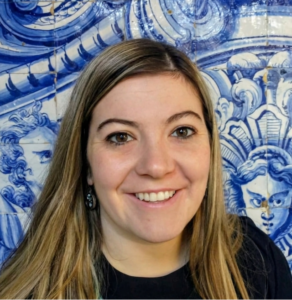
Caitlin Harvey is a Lecturer in Modern History at the University of Hull. Her research examines the history of migration, race, settlement, and education in a British imperial and global context. Her scholarly interests also include Indigenous history and the institutional and political development of settler/Indigenous societies since 1800. From 2021 to 2024, she was an Early Career Research Fellow of Fitzwilliam College, University of Cambridge. She also holds a Ph.D. in History from Princeton University, along with degrees from the University of Oxford and the University of Western Ontario. Her current book project is titled, Bricks and Mortar Boards: University-Building and the Growth of Settler Society, 1820-1920.